 Ferramentas e Testadores de Rede
 Cabos Ethernet Cat5e
 Cabos Ethernet Cat6
 Cabos Ethernet Cat6a
 Cabos Cat8
 Cabos Ethernet a granel
 Conectores e tomadas
 Gestão de Cabos
 OS2 Monomodo Simplex
 OS2 Monomodo Duplex
 Fibra OM3 Multimodo
 Multimodo OM4
 Multimodo OM2
 Multimodo OM5
 Cabos MTP/MPO
 Cabos de Conexão Personalizados
 Componentes de fibra óptica
 Produtos de Limpeza e Utensílios
 Cabos DisplayPort
 Cabos Mini DisplayPort
 Cabos HDMI
 Cabos HDMI Mini/Micro
 Cabos DVI
 Cabos VGA
 Cabos áudio
 Cabos Thunderbolt
 Cabos USB-C
 Cabos USB 3.0
 Cabos de alimentação
 Cabos SATA
 Cabos de série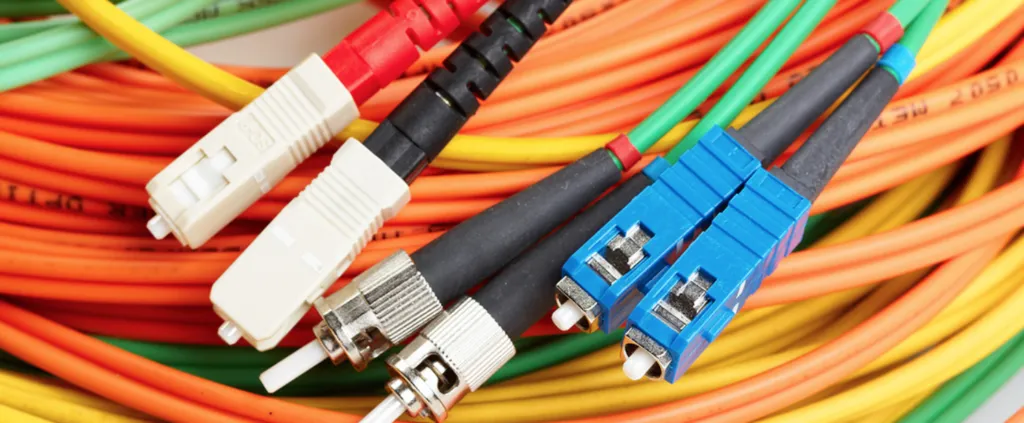
When selecting single-mode fiber optic connectors for network deployment, one critical question always arises: should you choose UPC or APC termination? Although these two connector types share similar appearances and connection methods, they differ greatly in end-face structure, polishing design, optical performance and applicable scenarios. Correct selection can effectively prevent signal reflection, network instability and equipment damage, helping users build a more reliable fiber cabling system.
1. Fundamental Difference: End-Face Polishing Design
The essential gap between UPC and APC lies in the fiber end-face polishing style.
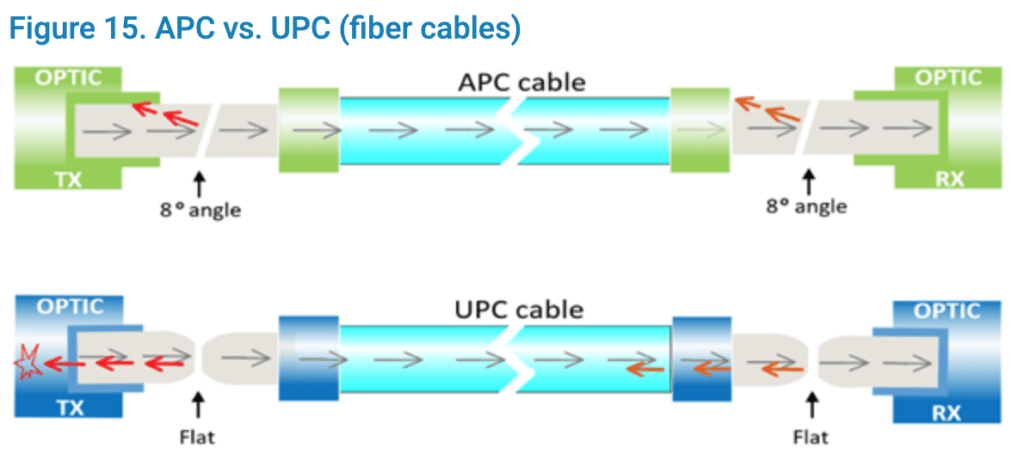
UPC stands for Ultra Physical Contact. Its end face is polished into a smooth convex surface without any angle. This design enables tight physical contact between two fiber cores and reduces connection gap.
APC means Angled Physical Contact. The end face is polished at an 8‑degree precise angle. The core purpose of the angled design is to change the reflection direction of residual light, so that the reflected light will be guided into the fiber cladding instead of returning directly to the light source device.
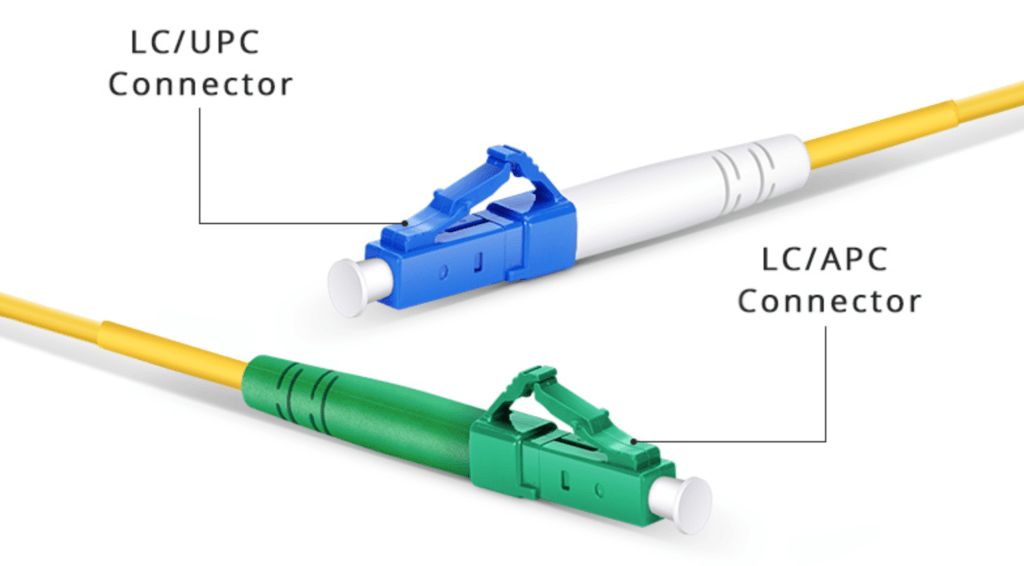
In actual identification, color is the most intuitive distinction:
- UPC connector: standard blue housing
- APC connector: standard green housing
2. Optical Performance: Insertion Loss and Return Loss
Optical performance determines network stability, mainly including insertion loss and return loss.
Insertion Loss
Insertion loss refers to the optical power loss during connection. Traditional UPC has slight advantages in fitting tightness. With the upgrade of manufacturing technology, high-quality industrial-grade connectors have narrowed the performance gap.
High-grade OS2 single-mode UPC and APC both maintain low insertion loss, meeting the requirements of long-distance and high-speed transmission.
Return Loss
Return loss is the core indicator to measure anti-reflection ability. Higher return loss value represents less light reflection and more stable signal.
- UPC: Good daily reflection suppression, suitable for conventional data networks.
- APC: Excellent return loss performance. The 8° angle greatly weakens backward reflection, which is essential for sensitive optical transmission equipment.
3. Recommended Application Scenarios
UPC Application
UPC is the mainstream choice for general data networking, with strong compatibility and cost performance.
- Enterprise office network
- Data center internal cabling
- Ordinary weak current engineering
- Short and medium distance Ethernet transmission
- Common switch and optical module connection
APC Application
APC is designed for high requirements on anti-reflection and signal purity.
- CATV cable television network
- PON, FTTx fiber access system
- Long-distance communication and WDM wavelength division equipment
- Radio frequency and video signal transmission
- High-sensitivity optical communication equipment
4. Important Wiring Specification Reminder
UPC and APC connectors cannot be mixed for interconnection.
Mating UPC with APC will lead to serious optical loss, abnormal signal attenuation, and even permanent scratches on the fiber end face, resulting in irreversible damage to connectors and expensive optical transmission equipment.
Unified matching rules:
- UPC connects only with UPC
- APC connects only with APC
5. Summary
UPC and APC have their own positioning in fiber cabling:
UPC is cost-effective, versatile and suitable for most daily data network scenarios.
APC focuses on high anti-reflection performance and is specially used for video, broadcast, PON and long-distance high-precision communication systems.
Reasonable selection according to actual business and transmission requirements can maximize fiber performance, extend service life, and ensure long-term stable operation of the entire network system