 Câbles Ethernet Cat5e
 Câbles Ethernet Cat6
 Câbles Ethernet Cat6a
 Câbles Cat8
 Câbles Ethernet en vrac
 Connecteurs et prises
 Gestion des câbles
 Outils et testeurs de réseau
 OS2 Singlemode Simplex
 OS2 Duplex monomode
 Fibre multimode OM3
 OM4 Multimode
 OM2 Multimode
 OM5 Multimode
 Câbles MTP/MPO
 Câbles de patch personnalisés
 Composants optiques à fibres
 Nettoyants et outils
 Câbles DisplayPort
 Câbles Mini DisplayPort
 Câbles HDMI
 Câbles mini/micro HDMI
 Câbles DVI
 Câbles VGA
 Câbles audio
 Câbles Thunderbolt
 Câbles USB-C
 Câbles USB 3.0
 Câbles d'alimentation
 Câbles SATA
 Câbles série
Votre panier est vide.

G.657.A1 vs G.652.D Single-Mode Fiber: Bend Performance and Compatibility
G.657.A1 vs G.652.D is mainly a comparison of bend performance, not a choice between incompatible single-mode fibers. ITU-T G.657.A1 adds tighter-bend performance requirements while remaining compliant with G.652.D. For buyers, the important distinction is where the fiber will be routed and what bend limit applies to the finished cable.
A tight cabinet, access installation or crowded patch panel may benefit from bend-optimized fiber. A conventional route with adequate bend control may not need the same margin. In either case, the fiber standard alone does not specify every characteristic of a complete patch cord.
G.657.A1 vs G.652.D: Key Differences
ITU-T G.652.D defines widely used single-mode fiber transmission characteristics. ITU-T G.657 addresses bend-insensitive single-mode fiber. Under the 2024 edition of G.657, Category A fiber is a subset of G.652.D, meaning it satisfies the G.652.D requirements while adding macrobending-loss requirements for tighter bends.
| Buying question | G.652.D | G.657.A1 |
|---|---|---|
| Primary emphasis | Single-mode transmission specification | G.652.D-compliant fiber with improved bend performance |
| Macrobending reference | Uses a larger-radius test condition, including 30 mm | Includes tests at 15 mm and 10 mm radii |
| Relationship | Baseline G.652.D requirements | Category A1 meets G.652.D requirements |
| Finished cable bend limit | Check cable datasheet | Check cable datasheet |
A1 is not the only bend-optimized grade: G.657.A2 specifies tighter fiber-level bending capability. This comparison focuses on A1 because it is commonly considered alongside G.652.D for ordinary access, transport and high-density cabling decisions.
What Does the 10 mm Bend Radius Actually Mean?
The 2024 G.657 recommendation identifies 10 mm as an appropriate minimum design radius for G.657.A1 fiber. It also defines macrobending-loss tests at specified radii and wavelengths. These are requirements for the optical fiber under defined conditions, not permission to bend every finished patch cable into a 10 mm loop.
A completed cable adds coating, buffer, jacket and potentially strength members. Its minimum installation and operating bend radii can therefore differ from the bare-fiber reference. Use the manufacturer’s limits for the exact cable assembly, especially near connectors, cable ties, cabinet corners and tightly packed trays.
Bend-related optical loss can become more noticeable at longer wavelengths. A fiber that is bend-optimized may provide useful margin in confined routing, but it is not bend-proof; poor routing can still harm performance or reliability.
Are G.657.A1 and G.652.D Compatible?
Yes, at the fiber-specification level. The 2024 ITU-T G.657 recommendation describes Category A fibers as compliant with G.652.D and having the same transmission and interconnection properties. G.657.A1 fiber can therefore be used in networks specifying G.652.D fiber, subject to the full project requirements.
That does not make two patch cords interchangeable in every respect. Connector format (such as LC or SC), polish (UPC or APC), cable construction, jacket, fiber count, length, test results and allowable bend radius remain separate purchase decisions.
Likewise, OS2 is not a synonym for either G.652.D or G.657.A1. OS2 refers to a single-mode cabling category; the actual fiber compliance statement must be checked separately for the product being ordered.
Which Fiber Should You Choose?
Choose G.657.A1 when routing space is limited
Bend-optimized fiber is especially relevant for dense distribution frames, compact cabinets, FTTH/access deployments and routes with tight cable management. It helps reduce sensitivity to macrobending when the installation is properly designed, but the finished-cable bend specification still applies.
G.652.D remains a valid option for controlled routes
For conventional single-mode pathways with suitable bends and mechanical protection, G.652.D remains a valid specification. Some fibers satisfy both G.652.D and G.657.A1, so the purchasing decision may be about the finished product and documentation rather than choosing mutually exclusive labels.
Check the exact assembly before ordering
- Fiber compliance: request G.652.D, G.657.A1 or documented dual compliance for the actual fiber used.
- Cable bend radius: check the complete cable or patch cord specification, not just the 10 mm fiber reference.
- Optical interfaces: specify fiber count, connector type and UPC/APC polish for each end.
- Environment: match jacket material and any required installation listing to the intended pathway.
- Acceptance testing: confirm insertion-loss criteria, return-loss requirements where applicable, wavelengths and necessary test records.
CableFam OS2 Patch Cord Examples
For configuration research, browse CableFam OS2 single-mode simplex patch cords. One SC UPC to ST APC simplex product listing identifies its glass fiber as G.657.A1. Treat that page as a starting point for selecting connectors and cable construction, and confirm current fiber provenance, compliance and the finished assembly’s bend limit before specifying a project order.
The purchasing rule is straightforward: use G.657.A1 where stronger bend performance is useful, recognize that it remains G.652.D-compliant, and verify the complete cable rather than choosing by a single label.
Produits apparentés
-

Cat6a 26AWG Snagless Shielded (S/FTP) LSZH Ethernet Network Patch Cable
Plage de prix : €3.15 à €13.50 Ce produit a plusieurs variations. Les options peuvent être choisies sur la page du produit -
OM4 LC to SC Fiber Patch Cord, Duplex UPC, 50/125μm Multimode, 2.0mm LSZH OFNR
Plage de prix : €3.68 à €26.34 Ce produit a plusieurs variations. Les options peuvent être choisies sur la page du produit -
XLR Male to Female Cable – 3 Pin Balanced, Black
Plage de prix : €2.98 à €6.00 Ce produit a plusieurs variations. Les options peuvent être choisies sur la page du produit -
Cat8 28AWG Snagless Shielded (S/FTP) PVC CM Ethernet Network Patch Cable, Off-White (câble de raccordement Ethernet Cat8 28AWG blindé (S/FTP) PVC CM, blanc cassé)
Plage de prix : €4.95 à €18.00 Ce produit a plusieurs variations. Les options peuvent être choisies sur la page du produit -
USB-C to DisplayPort Cable – 8K, 1m or 2m
Plage de prix : €8.82 à €11.03 Ce produit a plusieurs variations. Les options peuvent être choisies sur la page du produit -
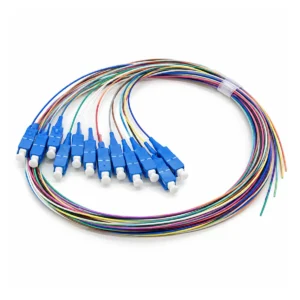
12 fibres SC UPC Pigtail, longueur 1m, mode simple G.652.D
€5.69 -
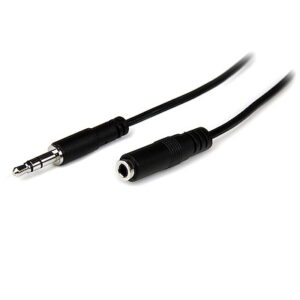
1m/2m Slim 3.5mm Stereo Extension Audio Cable - M/F
Plage de prix : €3.99 à €5.99 Ce produit a plusieurs variations. Les options peuvent être choisies sur la page du produit -
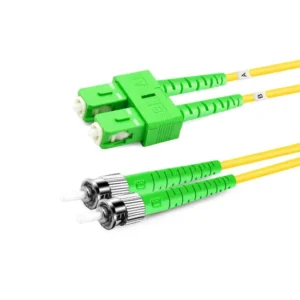
OS2 Duplex SC APC to ST APC Fiber Patch Cord, 9/125 Single-Mode, LSZH Jacket
Plage de prix : €3.29 à €7.38 Ce produit a plusieurs variations. Les options peuvent être choisies sur la page du produit