 Câbles Ethernet Cat5e
 Câbles Ethernet Cat6
 Câbles Ethernet Cat6a
 Câbles Cat8
 Câbles Ethernet en vrac
 Connecteurs et prises
 Gestion des câbles
 Outils et testeurs de réseau
 OS2 Singlemode Simplex
 OS2 Duplex monomode
 Fibre multimode OM3
 OM4 Multimode
 OM2 Multimode
 OM5 Multimode
 Câbles MTP/MPO
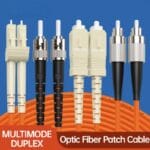 Câbles de patch personnalisés
 Composants optiques à fibres
 Nettoyants et outils
 Câbles DisplayPort
 Câbles Mini DisplayPort
 Câbles HDMI
 Câbles mini/micro HDMI
 Câbles DVI
 Câbles VGA
 Câbles audio
 Câbles Thunderbolt
 Câbles USB-C
 Câbles USB 3.0
 Câbles d'alimentation
 Câbles SATA
 Câbles série
Votre panier est vide.
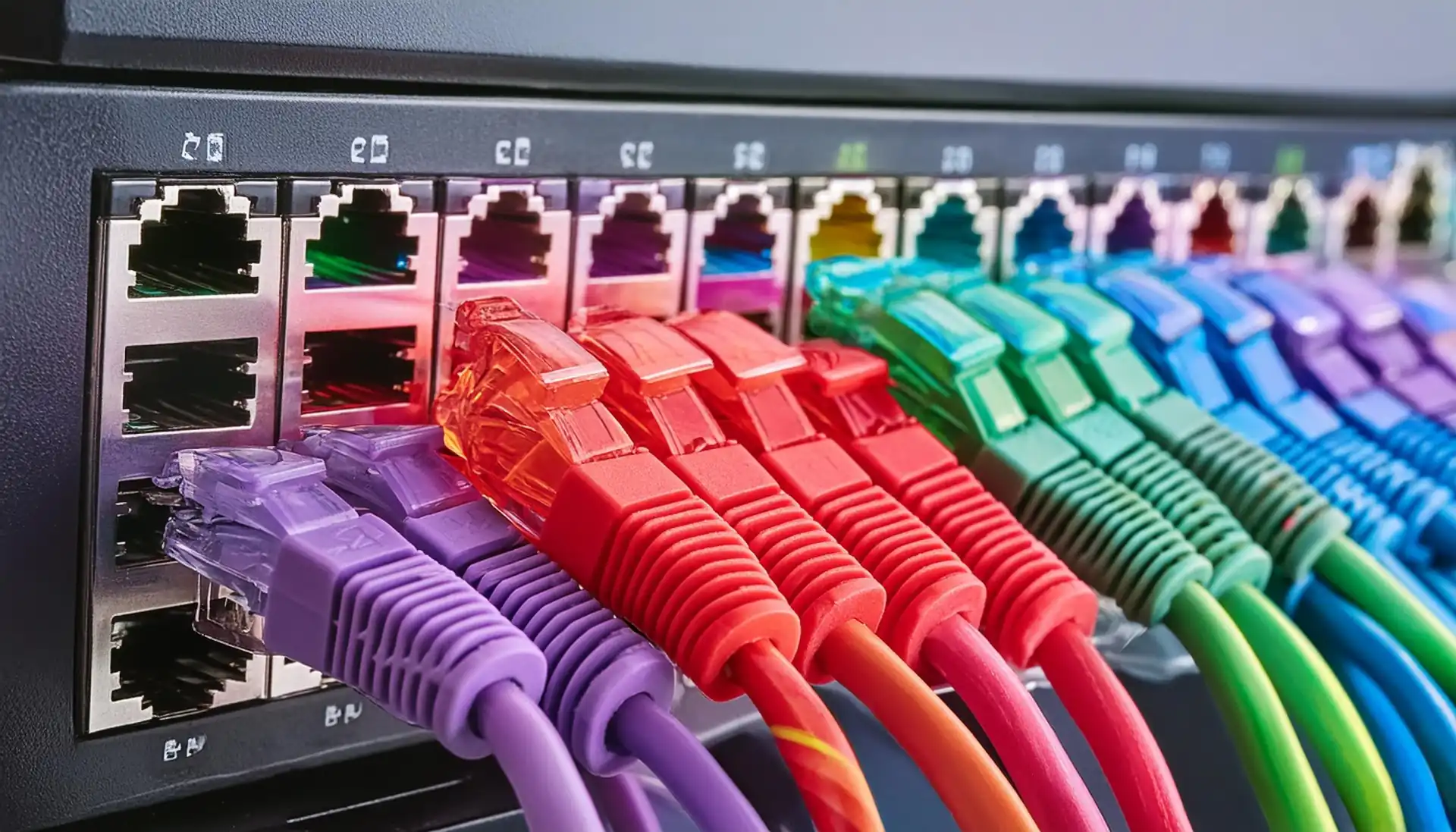
Comment choisir le bon câble Ethernet : un guide complet
Even in an era dominated by Wi-Fi 6 and 7, nothing beats a wired Ethernet connection when it comes to raw speed, low latency, and rock-solid reliability. Whether you are online gaming, streaming 4K/8K media, or setting up a home office, a physical network cable remains the gold standard.
However, picking up the right cable isn’t as simple as grabbing the cheapest one off the shelf. With terms like Cat6, UTP, Cat8, and AWG floating around, making the right choice can get confusing quickly.
This guide breaks down everything you need to know to select the ideal Ethernet cable for your setup.
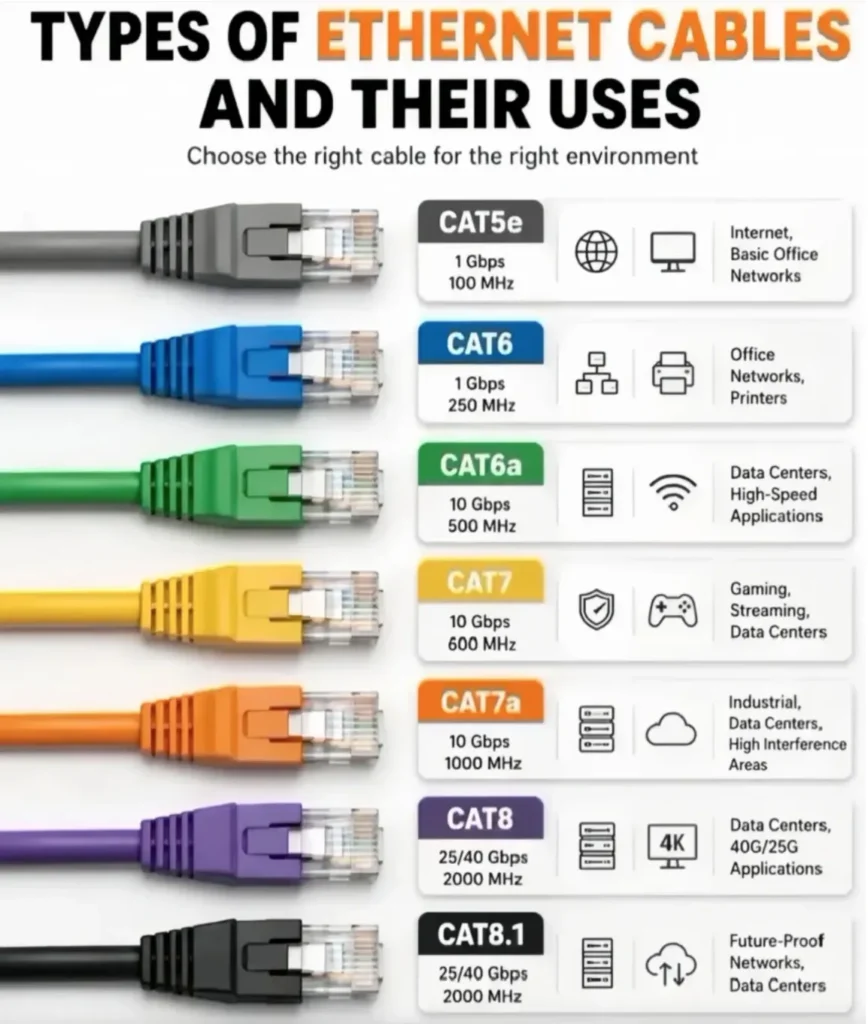
1. Understand the “Cat” Ratings (Categories)
Ethernet cables are categorized into generations called Categories (abbreviated as “Cat”). Higher numbers generally represent higher bandwidth capacity, faster maximum speeds, and better protection against signal noise.
| Category | Max Speed | Max Bandwidth | Max Distance at Full Speed | Best For… |
| Cat 5e | 1 Gbps | 100 MHz | 100m (328 ft) | Basic home internet under 1 Gbps (legacy) |
| Cat 6 | 10 Gbps | 250 MHz | 37–55m (121–180 ft) | Everyday home use, 1G–2.5G fiber connections |
| Cat 6a | 10 Gbps | 500 MHz | 100m (328 ft) | In-wall wiring, future-proofing, 10G NAS setups |
| Cat 7 | 10 Gbps | 600 MHz | 100m (328 ft) | Data centers, heavy industrial interference areas |
| Cat 8 | 40 Gbps | 2000 MHz | 30m (98 ft) | High-end server-to-switch data center links |
Which Category Should You Buy?
- Cat6 is the sweet spot for 95% of users. It easily handles Gigabit and multi-Gigabit home internet, costs very little, and is flexible to route around desks.
- Choose Cat6a if you are wiring walls. Because in-wall cables are difficult to replace later, Cat6a guarantees full 10 Gbps speeds over the full 100-meter distance.
- Skip Cat7 and Cat8 for standard home setups. Cat7 uses proprietary shielding standards that aren’t officially recognized by TIA/EIA, and Cat8 is overkill meant primarily for short server rack runs in data centers.
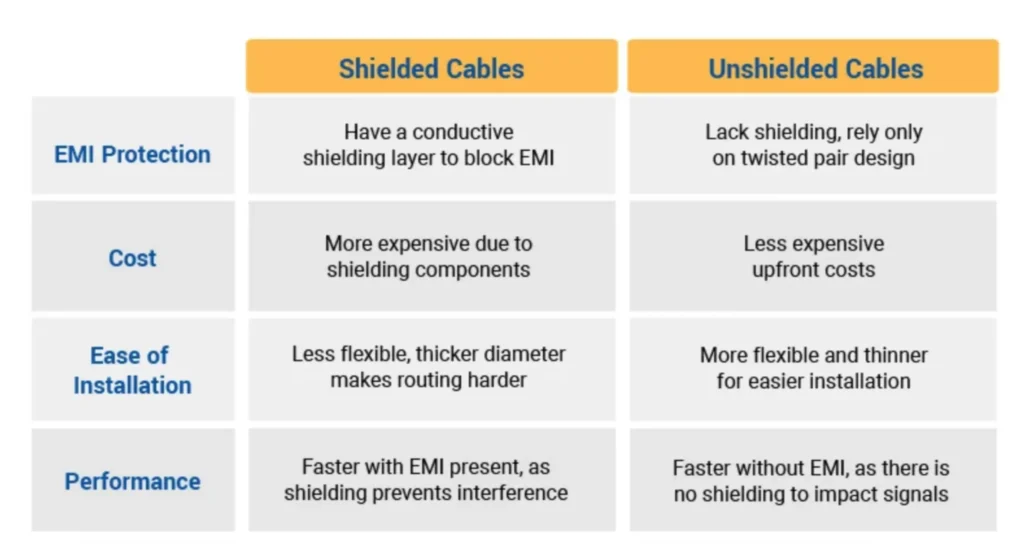
2. Shielded vs. Unshielded Cables (UTP vs. STP)
Inside an Ethernet cable, copper wires are twisted together to reduce electromagnetic interference (EMI). Depending on your environment, you can choose between two main types:
- UTP (Unshielded Twisted Pair): Contains no metal foil shielding. It is thin, highly flexible, inexpensive, and perfect for almost all home setups.
- STP / FTP (Shielded / Foiled Twisted Pair): Features metal foil or braided shielding surrounding the internal wire pairs. It protects against severe electrical noise (e.g., cables running alongside heavy electrical power lines or inside factory floors).
Rule of Thumb: Unless you are running cables directly alongside high-voltage power lines inside walls, standard UTP is more than adequate for home and office environments.
3. Key Hardware Details to Look For
When shopping, keep an eye on these physical specs to ensure long-term durability:
- Bare Copper vs. CCA (Copper-Clad Aluminum): Always purchase Pure Bare Copper cables. Avoid cheaper CCA cables—they have higher resistance, heat up faster under Power-over-Ethernet (PoE), and snap easily when bent.
- RJ45 Connectors: Ensure the cable uses standard RJ45 plugs with 50-micron gold-plated contacts to prevent oxidation over time.
- Cable Form Factor:
- Round Cables: Standard design, best for overall performance, durability, and longer runs.
- Flat Cables: Great for running under carpets or along baseboards, though slightly less resistant to heavy interference over long distances.
- Round Cables: Standard design, best for overall performance, durability, and longer runs.
Summary: Quick Recommendation Checklist
- Everyday Home & Gaming Setup: Get a Cat6 UTP Pure Copper patch cable. It is cheap, highly flexible, and supports up to 10 Gbps at short lengths.
- New House / In-Wall Cabling: Go with Cat6a UTP/FTP (Solid Copper) to future-proof your home for 10 Gigabit speeds over the next decade.
- Power over Ethernet (PoE / Security Cameras): Choose Cat6 Solid Bare Copper (23 AWG or 24 AWG) to minimize power loss and heat build-up.
Produits apparentés
-

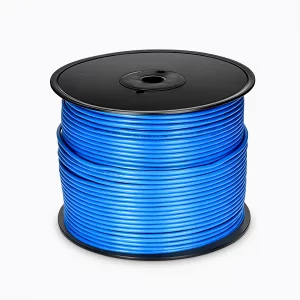
Câble Ethernet en vrac Cat6, 305m, homologué UL, fil de cuivre pur multibrins 24AWG, 550MHz, non blindé (UTP), PVC CM, avec bobine (bleu)
€323.75 -
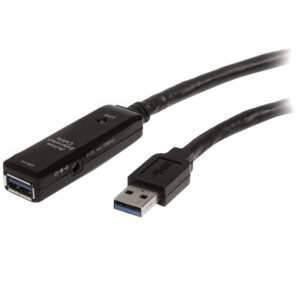
Câble d'extension actif USB 3.0 (5 Gbit/s) – M/F – TAA
Plage de prix : €41.99 à €63.99 Ce produit a plusieurs variations. Les options peuvent être choisies sur la page du produit -
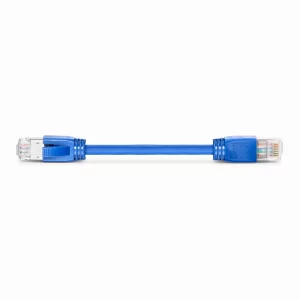
Cat6a 23AWG Snagless Shielded (F/FTP) LSZH Ethernet Network Patch Cable
Plage de prix : €6.30 à €24.30 Ce produit a plusieurs variations. Les options peuvent être choisies sur la page du produit -
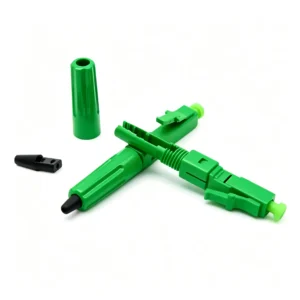
LC APC Field Assembly Mechanical Connector, Simplex OS1/OS2 Single Mode Pre-Polished Ferrule Quick Connector for FTTH
€2.94 -
MPO UPC femelle vers 4 LC UPC Duplex OM4 50/125 Câble de rupture en fibre multimode, 8 fibres de type B, LSZH, Aqua/Violet
Plage de prix : €18.53 à €35.70 Ce produit a plusieurs variations. Les options peuvent être choisies sur la page du produit -
MPO (mâle) OM3/OM4 Multimode Field Assembly Splice-on Connector, Flat Ribbon
€11.59 -
Câble 1 m/2 m USB-C, USB 5 Gbps, alimentation 60 W (3 A), mode alternatif DP 4K 60 Hz, gaine en TPE – Compatible Thunderbolt
Plage de prix : €9.99 à €13.99 Ce produit a plusieurs variations. Les options peuvent être choisies sur la page du produit -
Câble audio stéréo coudé 3,5 mm M/M
Plage de prix : €1.20 à €1.80 Ce produit a plusieurs variations. Les options peuvent être choisies sur la page du produit