 Network Tools & Testers
 Cat5e Ethernet Cables
 Cat6 Ethernet Cables
 Cat6a Ethernet Cables
 Cat8 Cables
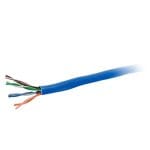 Bulk Ethernet Cables
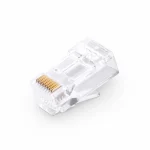 Connectors & Jacks
 Cable Management
 OS2 Singlemode Simplex
 OS2 Singlemode Duplex
 OM3 Multimode Fiber
 OM4 Multimode
 OM2 Multimode
 OM5 Multimode
 MTP/MPO Cables
 Patch Cables Custom
 Fiber Optic Components
 Cleaners & Tools
 DisplayPort Cables
 Mini DisplayPort Cables
 HDMI Cables
 HDMI Mini/Micro Cables
 DVI Cables
 VGA Cables
 Audio Cables
 Thunderbolt Cables
 USB-C Cables
 USB 3.0 Cables
 Power Cables
 SATA Cables
 Serial Cables
 1.8m 1-Port USB to Serial RS232 Adapter, FTDI DB9 Serial DCE Adapter Cable, Null Modem, USB 2.0 – TAA
 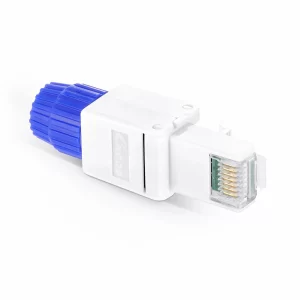 Cat5e/Cat6/Cat6a RJ45 Tool-Free Modular Plugs, Unshielded Network Connectors for 23~26AWG Twisted Pair Solid or Stranded Cable (10/Pack)
Introduction: The biggest consensus in the optical fiber industry in 2026: this is not a short-term price hike, but a super cycle driven by structural supply-demand mismatch. The explosive growth of AI computing power has generated massive optical connection demand, while the expansion of upstream core production capacity is severely lagging. Multiple authoritative institutions predict that fiber shortage and high prices will continue until the end of 2027, sustaining industry dividends.
Since 2026, the global optical fiber and cable market has fully entered a tight supply-demand state. Spot shortages, extended delivery cycles, and continuous price hikes have spread across domestic markets, Europe, America, Southeast Asia and other global regions.
Unlike previous short-term market booms driven by traditional telecommunications construction, the core driver of the current fiber shortage and price surge is the explosive demand for high-speed computing in AI data centers. The surging market demand and the long cycle of upstream capacity expansion have continuously intensified the global fiber shortage crisis.
This article thoroughly analyzes the core causes of the fiber shortage, price trends, supply and demand gaps, and industry trends for the next two years.
I. Demand Side: AI Reshapes Fiber Demand Logic with Explosive Growth
In the past, fiber demand was mainly driven by 5G construction, home broadband deployment and metropolitan area network upgrades. Starting from 2026, AI computing infrastructure has become the primary growth engine, greatly lifting the ceiling of industrial demand.
Compared with traditional IDC rooms, AI data centers show a dramatic increase in fiber demand:
- A single AI data center consumes 3–5 times more optical fiber than a traditional data center
- High-speed networking for GPU clusters adopts fat-tree and dragonfly network topologies, leading to an exponential rise in optical interconnection wiring demand
- The popularization of 40G/100G/400G high-speed ports fuels booming demand for ultra-low loss and bend-resistant special optical fibers
Industry data shows that global fiber demand will reach8.0–8.5 billion core kilometers in 2026, a year-on-year increase of 25%–30%, and will further rise to 8.8–9.0 billion core kilometers in 2027. The market share of AI-specific optical fibers will surge from less than 5% in 2024 to about 35% in 2027.
Supported by the continuous expansion of 5G networks, the popularization of all-optical home networks and the development of industrial Internet, multi-scenario demand resonance has pushed the optical fiber industry into an all-time high prosperity stage.
II. Supply Side: Preform Capacity Caps Output, No Short-Term Solution
While market demand is skyrocketing, the supply side fails to keep up, with the core bottleneck lying in the optical fiber preform — the “heart” of the fiber industry chain.
Optical preforms account for more than 70% of the total fiber cost and determine fiber production capacity and quality, with extremely high capital, technical and time barriers:
- Long capacity expansion cycle: A single high-end preform production line requires an investment of over 2 billion RMB, with a full expansion cycle of 18–24 months, making rapid capacity supplementation impossible in the short term
- Thorough industry reshuffle: The prolonged price war from 2019 to 2024 eliminated numerous small and medium-sized manufacturers, leaving leading enterprises cautious about capacity expansion
- Full global capacity utilization: All mainstream manufacturers at home and abroad are running at full capacity, and overseas giants have clarified that no large-scale new capacity will be released before 2028
In addition, G.654.E ultra-low loss fibers and G.657 bend-resistant fibers tailored for AI scenarios feature higher production difficulty and lower drawing efficiency. With fixed total capacity, the shortage of high-end special fibers is more severe, with the industry gap exceeding 30%.
III. Price Trend: Full-Category Price Surge, Global High-Price Era Arrives
The severe supply-demand imbalance has driven continuous fiber price hikes since late 2025, hitting a seven-year high.High-end fibers see far larger price increases than ordinary fibers.
Core Fiber Price Changes (Nov 2025 – May 2026)
- G.657.A2 AI Bend-Resistant Fiber: RMB 32/core-km → RMB 240/core-km, 650% price increase
- G.652.D Standard Single-Mode Fiber: RMB 20/core-km → RMB 83.4/core-km, 418% price increase
- G.654.E Ultra-Low Loss Fiber: Over 300% premium, available in name only in spot markets
The price surge is a global trend: European market up 159% YoY, Indian market up 214% YoY, and North American market up 48% YoY. At present, orders of mainstream global manufacturers have been scheduled until 2027–2028, with the industry delivery cycle extended to more than 20 weeks. Prepayment for capacity reservation has become a common industry practice.
IV. Authoritative Forecast: Supply Gap Expands in 2027, High Prices Here to Stay
According to calculations by authoritative institutions including CRU, CICC and Nomura, the global fiber supply-demand gap will continue to expand in the next two years, reaching its peak in 2027 with no reversal of the high-price trend.
- 2026: Demand reaches 8.0–8.5 billion core kilometers, effective supply stands at 7.5–7.7 billion core kilometers, with an overall supply gap of 5%–10%
- 2027: Demand rises to 8.8–9.0 billion core kilometers, while supply is only 7.5–8.0 billion core kilometers, pushing the overall gap to around 15%, and the gap for high-end special fibers exceeds 30%
- 2028: New capacity will be released intensively, yet the annual supply gap will still remain above 10%
Core Conclusion: Before the end of 2027, the global fiber supply shortage cannot be fundamentally reversed, and the industry will maintain a state of product shortage, rising prices and high prosperity.
V. Industry Restructuring: Chinese Fiber Enterprises Become the Biggest Winners
This super cycle has completely reshaped the global fiber industry pattern, with Chinese leading enterprises gaining prominent advantages relying on full industrial chain layout:
1. Upstream Profit Concentration, Strengthened Leading Enterprise Effect
Leading enterprises with independent preform production capacity and special fiber technology (YOFC, Hengtong, Zhongtian, FiberHome, etc.) continue to boost profits. In contrast, small and medium-sized manufacturers without core technology and relying on outsourced preforms are gradually marginalized due to high costs and insufficient capacity, further increasing industry concentration.
2. China Takes Global Leadership in the Fiber Industry
Benefiting from a complete industrial chain covering preform, fiber and cable, superior cost control and large-scale production capacity, Chinese fiber enterprises occupy more than 50% of the global market share, serving as the core supplier amid the global fiber shortage with booming overseas orders.
3. Surging Cost Pressure on Downstream Projects
Downstream sectors including data centers, telecom operators, security monitoring and government & enterprise networking face dual pressures of doubled procurement costs and prolonged delivery cycles. Some small and medium-sized projects have been delayed due to cost overruns, marking the arrival of a new industry stage featuring high costs, high thresholds and high prosperity.
The ongoing global fiber shortage is not a short-term market fluctuation, but a structural super cycle triggered by explosive AI computing power demand and rigid long-cycle supply constraints.
Product shortage, price hikes and tight supply will remain the mainstream industry trend in the next year, and 2027 will be the peak of this prosperity cycle. For industry practitioners, purchasers, engineering contractors and investors, the core coping strategies are to lock in long-term production capacity, prioritize the layout of high-end special fibers, and avoid low-cost and low-quality supplies.