 Network Tools & Testers
 Cat5e Ethernet Cables
 Cat6 Ethernet Cables
 Cat6a Ethernet Cables
 Cat8 Cables
 Bulk Ethernet Cables
 Connectors & Jacks
 Cable Management
 OS2 Singlemode Simplex
 OS2 Singlemode Duplex
 OM3 Multimode Fiber
 OM4 Multimode
 OM2 Multimode
 OM5 Multimode
 MTP/MPO Cables
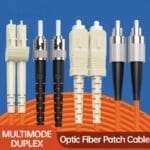 Patch Cables Custom
 Fiber Optic Components
 Cleaners & Tools
 DisplayPort Cables
 Mini DisplayPort Cables
 HDMI Cables
 HDMI Mini/Micro Cables
 DVI Cables
 VGA Cables
 Audio Cables
 Thunderbolt Cables
 USB-C Cables
 USB 3.0 Cables
 Power Cables
 SATA Cables
 Serial Cables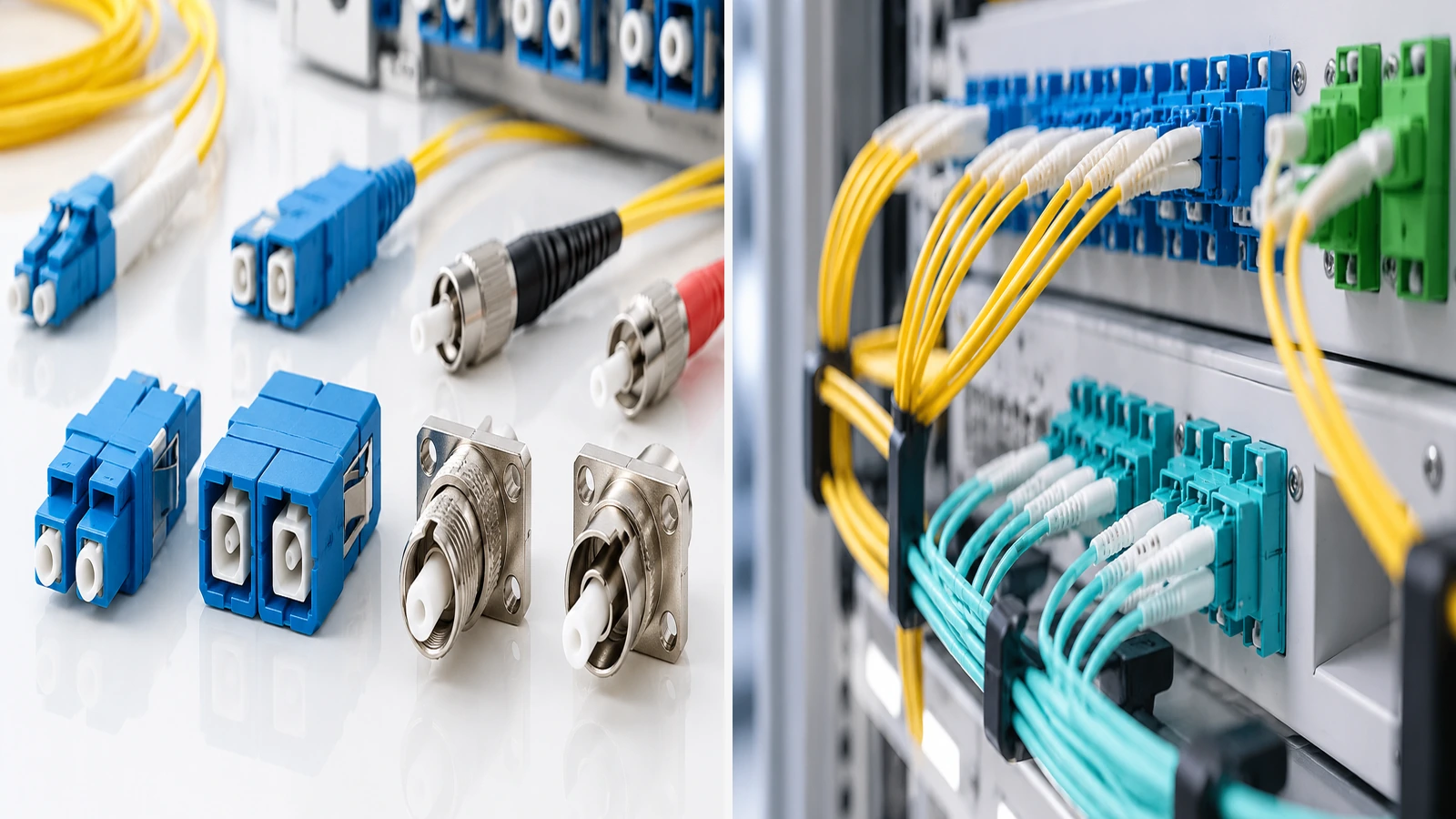
Fiber optic adapter types are easier to choose when you separate the different classification dimensions. LC, SC, FC, and ST identify connector interfaces; simplex and duplex describe the number of connector positions; hybrid identifies different connector interfaces on the two sides; and UPC or APC describes the connector end-face polish. These terms are related, but they do not describe the same thing.
This guide explains the main fiber optic adapter types, how the common LC, SC, FC, and ST versions differ, when simplex or duplex is appropriate, and when a hybrid adapter makes sense. It also covers the checks that matter before ordering an adapter for a patch panel, ODF, equipment panel, or other fiber connection point.
What Is a Fiber Optic Adapter?
A fiber optic adapter is a passive connectivity component used to align two fiber optic connectors so their optical end faces can mate accurately. Adapters are commonly installed in patch panels, optical distribution frames (ODFs), equipment panels, wall outlets, and other fiber-management hardware.
The adapter itself does not define the fiber transmission mode. Its primary job is mechanical alignment and connection between compatible connector interfaces. The exact adapter specification can also include the mounting style, alignment sleeve, keying, housing design, and the connector combination it is intended to accept.
You may also see the word coupler in product listings for passive female-to-female fiber connections. The terminology can overlap in this context, but “optical coupler” can also describe a device that combines or splits optical power. Always check the actual function of the product rather than choosing by the name alone.
What Are the Main Fiber Optic Adapter Types?
The most useful way to understand fiber optic adapter types is to classify them by separate dimensions instead of treating every term as a separate product family. The connector interface is one dimension. Simplex or duplex is another. Hybrid describes a different interface on each side. UPC and APC describe end-face polish.
LC Fiber Optic Adapters
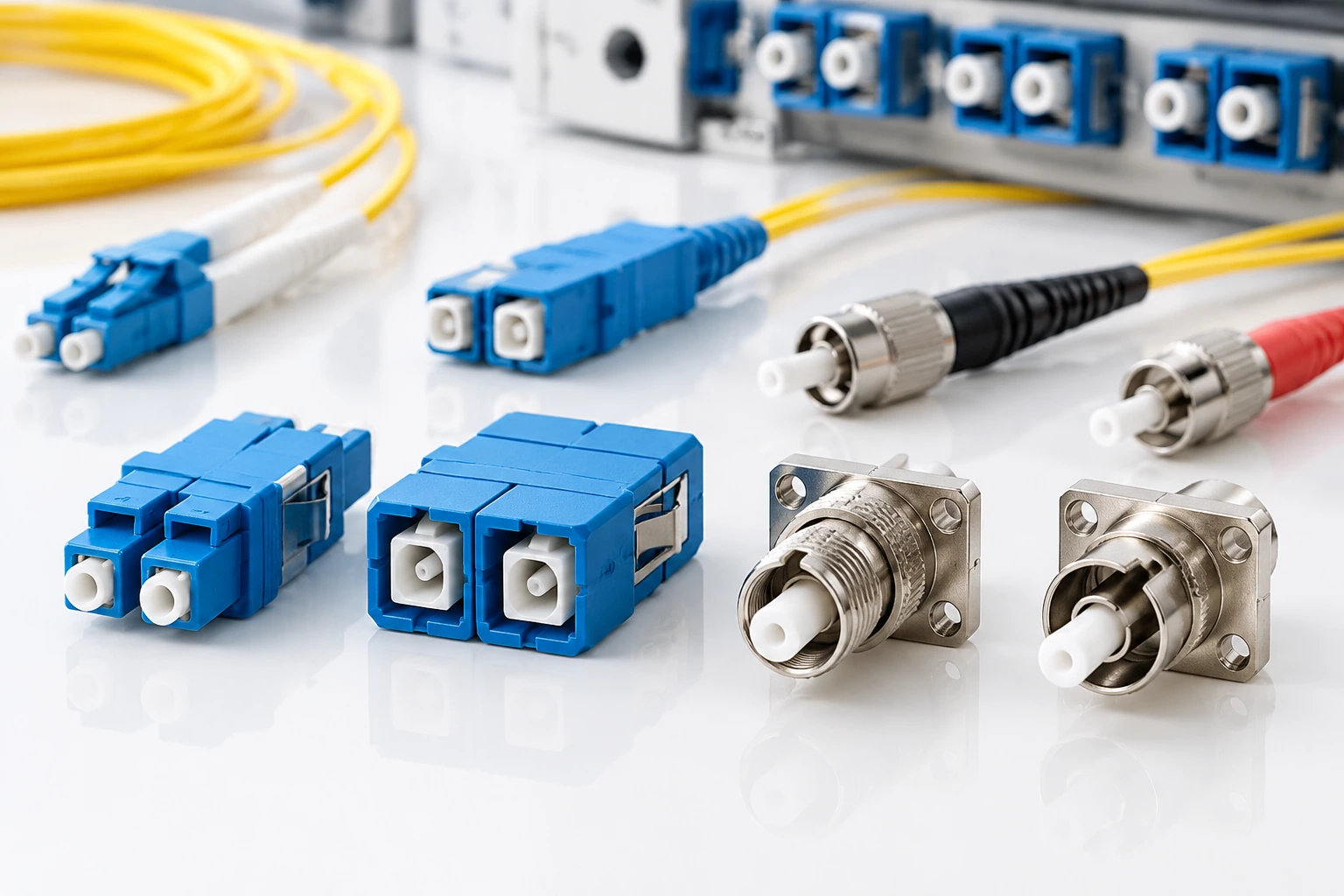
LC adapters are designed for LC connectors and are a common choice where compact connections and high-density patching are important. LC adapters are available in simplex and duplex configurations, so the connector format and panel layout should be checked together.
SC Fiber Optic Adapters
SC adapters are designed for SC connectors and use the larger SC interface. They are available in different configurations for fiber distribution and connection hardware. If the existing patch panel or equipment uses SC connectors, the adapter should match that interface and the required port arrangement.
FC Fiber Optic Adapters
FC adapters are designed for FC connectors, which use a threaded coupling mechanism. This makes the FC interface distinct from the push-pull LC and SC formats. The adapter should therefore be selected according to the FC connector and the mounting hardware used in the installation.
ST Fiber Optic Adapters
ST adapters are designed for ST connectors, which use a bayonet-style coupling mechanism. They remain relevant when maintaining compatible legacy or existing fiber equipment. When replacing or extending an older installation, matching the existing ST interface can be more important than selecting a newer connector format.
Simplex vs Duplex Fiber Optic Adapters
Simplex and duplex describe the connector-position configuration of the adapter. A simplex adapter provides one alignment position, while a duplex adapter provides two side-by-side positions for a duplex connector arrangement.
The choice should follow the physical connector and panel configuration. If the installation uses separate single-fiber connectors, a simplex adapter may be appropriate. If it uses a duplex connector arrangement with two adjacent ferrules, a duplex adapter is normally the matching configuration.
What Is a Hybrid Fiber Optic Adapter?
A hybrid fiber optic adapter is designed to connect two different connector interfaces. Examples include LC-to-SC, LC-to-FC, and LC-to-ST hybrid configurations. Instead of requiring a custom cable assembly solely to bridge two connector formats, a suitable hybrid adapter can provide the interface transition at the connection point.
Hybrid adapters still need to match the exact connector configuration, connector gender where applicable, mounting style, and polish requirements of the connected components. “Hybrid” describes the interface relationship; it does not by itself specify every other property of the adapter.
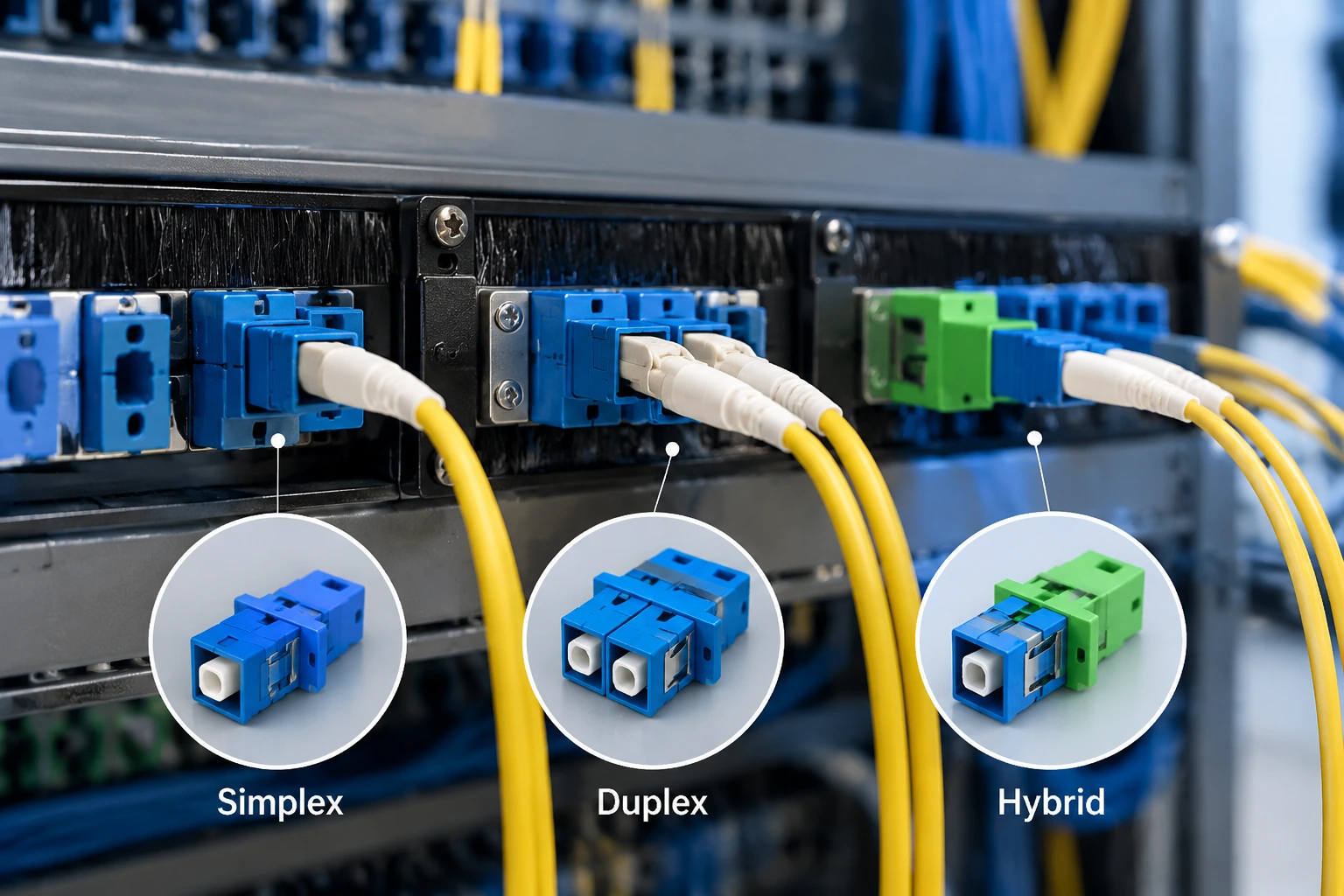
CableFam currently lists a hybrid adapter with an LC female interface and SC, FC, or ST female options, as well as separate simplex and duplex adapter products in its fiber connectivity range. See the Fiber Optic Connectivity category for the currently listed configurations.
UPC vs APC: A Different Classification Dimension
UPC and APC should not be confused with LC, SC, FC, or ST. LC, SC, FC, and ST identify connector interfaces, while UPC and APC describe the polish of the fiber connector end face. Keeping these dimensions separate makes product specifications much easier to read.
UPC uses a physical-contact end-face design. APC uses an angled physical-contact end face that is intended to direct reflected light away from the source path. For systems where back-reflection control is important, the required polish should be confirmed from the equipment and link specification.
Do not assume that two connectors from the same interface family can be mated simply because both are LC, SC, FC, or ST. The polish type must also be compatible. For more detail on LC polishing, see CableFam’s LC UPC and LC APC guide.
How to Choose the Right Fiber Optic Adapter
When comparing fiber optic adapter types, check the requirements in this order. This prevents a common mistake: choosing a part that matches the connector name but not the complete installation.
- Connector interface: Identify the connector on each side, such as LC, SC, FC, or ST.
- Simplex or duplex: Match the number and arrangement of connector positions to the cable and panel.
- Standard or hybrid: If the two sides use different connector interfaces, select the exact hybrid combination.
- UPC or APC: Confirm the connector end-face polish required by the optical link.
- Mounting style: Check whether the adapter must fit a flange, panel, bulkhead, or another mounting arrangement.
- Fiber application: Confirm compatibility with the single-mode or multimode system and the intended installation.
- Optical requirements: If insertion loss, return loss, or another performance value is part of the project requirement, use the exact product specification or test information rather than a generic number.
Common Fiber Optic Adapter Selection Mistakes
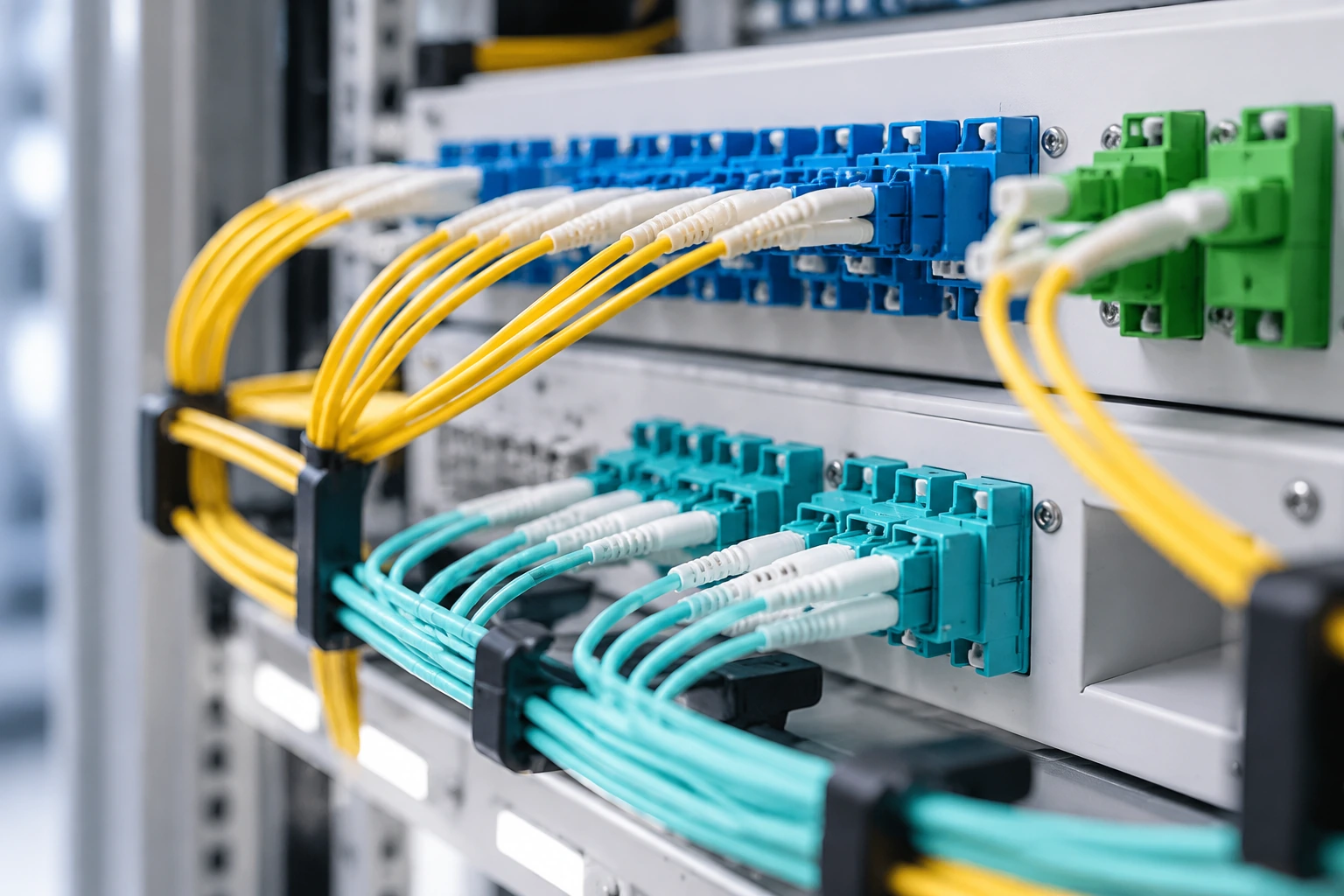
One common mistake is treating connector type as the entire specification. An LC adapter, for example, can still differ in simplex or duplex configuration, mounting design, keying, sleeve construction, and other details.
Another mistake is treating UPC and APC as interchangeable. They are different end-face polish configurations, so the complete connection should be checked before components are mated. A third mistake is comparing a generic “low loss” claim with a formal project acceptance requirement without checking what object was tested and under which conditions.
Fiber Optic Adapter Buying Checklist
Before ordering, record the connector interface required on each side, simplex or duplex configuration, UPC or APC polish, connector gender where applicable, mounting style, fiber application, and any project-specific optical requirement. If the adapter is replacing an existing part, checking the installed connector and panel before ordering is often the fastest way to avoid a mismatch.
CableFam’s Fiber Optic Connectivity category currently includes SC duplex adapters, LC simplex adapters, multi-type LC/SC configurations, and LC-to-SC/FC/ST hybrid adapter options.
FAQ
Are fiber optic adapters and couplers the same thing?
For passive female-to-female fiber connections, product listings may use either term. However, “optical coupler” can also refer to a device that combines or splits optical power, so check the actual product function and specification.
Can an LC adapter connect an LC connector to an SC connector?
A standard LC-to-LC adapter cannot. An LC-to-SC hybrid adapter is designed for that interface transition.
Should I choose simplex or duplex?
Match the adapter to the connector and panel configuration. Use simplex when one alignment position is required and duplex when the installation uses a two-position duplex connector arrangement.
Can UPC and APC connectors be mixed?
Do not assume they can be mated. Confirm the polish type required by the equipment and optical link, and use matching compatible components.
Conclusion
The main fiber optic adapter types become much easier to compare once the classification dimensions are separated. LC, SC, FC, and ST identify connector interfaces; simplex and duplex describe connector-position configuration; hybrid identifies different interfaces on the two sides; and UPC or APC describes end-face polish.
Start with the connector interfaces, then confirm the simplex or duplex format, hybrid requirement, polish, mounting style, fiber application, and any required optical specification. This approach helps you choose an adapter that matches the actual connection instead of relying on the connector name alone.